
Someone in your area just Googled your trade. They saw your name, clicked, and landed on your Facebook page. Or a listing with no website at all.
They went back and hired the next result.
You'll never know it happened. That's the part that should bother you.
This isn't a rare edge case. It's playing out dozens of times a month for local service businesses that don't have a real website. Not because those businesses do bad work — most of them are excellent at what they do. But in the time it takes a potential customer to decide who to call, a professional website is the difference between looking established and looking like a maybe.
The good news: this is one of the most fixable problems in your business, and it doesn't require months of back-and-forth or a five-figure invoice. A professional site can be live in 24 hours.
Here's why it matters, and what to do about it.
The Short Answer Is Yes. Here's the Long One.
Most business owners already know they need a website. They've known for a while. What keeps them from pulling the trigger is usually one of three things: "I have Facebook," "I get enough referrals," or "I just haven't had time to deal with it."
All three are understandable. None of them are protecting you from the problem.
In 2025, when someone needs a roofer after a storm, an HVAC tech in July, or a nail salon before a wedding, they don't ask around first. They pull out their phone and search. Google returns a list. They click the ones that look credible and move past the ones that don't. A real website is the single biggest credibility signal in that moment — bigger than your reviews, bigger than your years in business, bigger than word of mouth.
If you're not there, you're not in the running.
What Happens When a Customer Can't Find You Online
Picture the customer who just moved to your city. No referral network yet. No neighbor to ask. They need an electrician, a chiropractor, a plumber. They search, they scan the top results, and they call whoever looks like the real deal.
That customer will never find you through word of mouth. Google is their only path to your door. And if that path leads nowhere — or worse, to a Facebook page — they're gone in under ten seconds.
According to BrightLocal's annual consumer research, 98% of people used the internet to find information about a local business in the past year. Not most people. Nearly all of them. And what they're looking for when they land somewhere is simple: does this business look legitimate? A clean website with your services, your hours, and a few real reviews answers that question immediately. A Facebook page, or nothing at all, leaves them guessing.
Most people don't guess. They move on.
"But I Have a Facebook Page..."
This is the most common one, so let's deal with it directly.
Facebook is useful. It's not a website, and it doesn't do what a website does.
When someone searches for your type of business on Google, Facebook pages rarely show up in the top local results. Your website can. When a customer clicks your Google Business Profile and it links to your Facebook page instead of a real site, it raises a flag — not because Facebook is bad, but because established businesses have websites. It's a trust signal that's hard to fake and easy to lose.
There's also a control issue. Your Facebook page lives on Facebook's platform, by Facebook's rules, subject to Facebook's algorithm. Your reach can drop overnight, your account can be restricted, and the platform can change what it shows without any notice. Your website belongs to you. No algorithm decides whether your homepage loads when someone visits it directly.
Facebook is where you stay in touch with people who already know you. A website is how new customers find you in the first place. You need both. One does not replace the other.
What a Website Does for a Local Service Business
There's a version of this conversation where someone tries to sell you on "online presence" and "digital footprint" and a bunch of other phrases that don't mean anything practical. That's not what this is.
A good small business website does three concrete things: it builds trust before you ever speak to someone, it helps Google send you customers who are actively searching for what you do, and it handles the basic work of answering questions while you're out on the job.
It Builds Trust Before You Even Pick Up the Phone
Referrals are the best lead you can get. But most business owners don't realize that even when someone gets your number from a friend, there's a good chance they Google you before they call.
They're not doubting the referral. They just want to see what they're walking into — your hours, your services, maybe a photo of your work. It's the same thing you'd do. And what they find in that moment either confirms the referral or quietly plants a seed of doubt.
A professional website with your real services, your actual hours, and a handful of genuine reviews tells them everything they need to feel confident. It says: this is a real business, run by someone who takes it seriously. The call happens.
A missing website, or a Facebook page that hasn't been updated since 2022, tells a different story. Not a damning one. Just an uncertain one. And uncertain customers often talk themselves out of calling.
You don't get a second chance at that moment. The website either does the work or it doesn't.
It Helps Google Send You Customers
Your Google Business Profile is valuable. It puts your name on the map, shows your hours, and collects your reviews. But it works best when it connects to a real website — that's how Google confirms you're a legitimate, active business worth recommending.
More importantly, a website lets you show up for searches beyond your business name. Someone who already knows you will search for you directly. But the customer you haven't met yet is searching "HVAC repair near me" or "best roofer in Albuquerque" or "nail salon open Sunday." Those searches return websites, not Facebook pages. If you don't have one, you're invisible to everyone who doesn't already know you exist.
That's a big group of people to be invisible to.
We've covered how Google uses your site's structure and content to decide where you rank — if you want to go deeper on that, this article on SEO for local businesses is a good next read.
It Works While You're on the Job
You're not sitting at a desk waiting for inquiries. You're on a roof, under a sink, or with a client who has your full attention. You can't always answer the phone, and you definitely can't answer it at 10pm when someone's AC just quit.
Your website can.
A contact form or a booking link captures that lead while you're working. Your hours answer the question before anyone has to ask. Your services page tells them whether you cover their area and handle their problem. By the time they reach you, they've already decided they want to hire you. You're not selling anymore — you're just confirming the details.
That's what a good website does. It's not a brochure that sits on a shelf. It's the first conversation with every new customer you haven't met yet, happening automatically, around the clock, whether you're on a job site or off the clock entirely.
"I've Been Meaning to Do This For a While..."
That's the thing we hear most. Not "I don't want a website." Just "I haven't gotten around to it yet."
The tricky part is that "not yet" has a cost most people don't think about. It's not a fee or a penalty. It's quieter than that. It's the customer who found your competitor last Tuesday. The job that went to someone else last weekend. The person who searched for your trade at 9pm, couldn't find you, and booked someone else by morning.
None of those moments announce themselves. That's what makes them easy to ignore — until you start thinking about how many of them have happened while you were waiting.
What "ASAP" Actually Looks Like
Getting a professional website doesn't have to mean weeks of back-and-forth, a lengthy approval process, or an invoice that makes you wince.
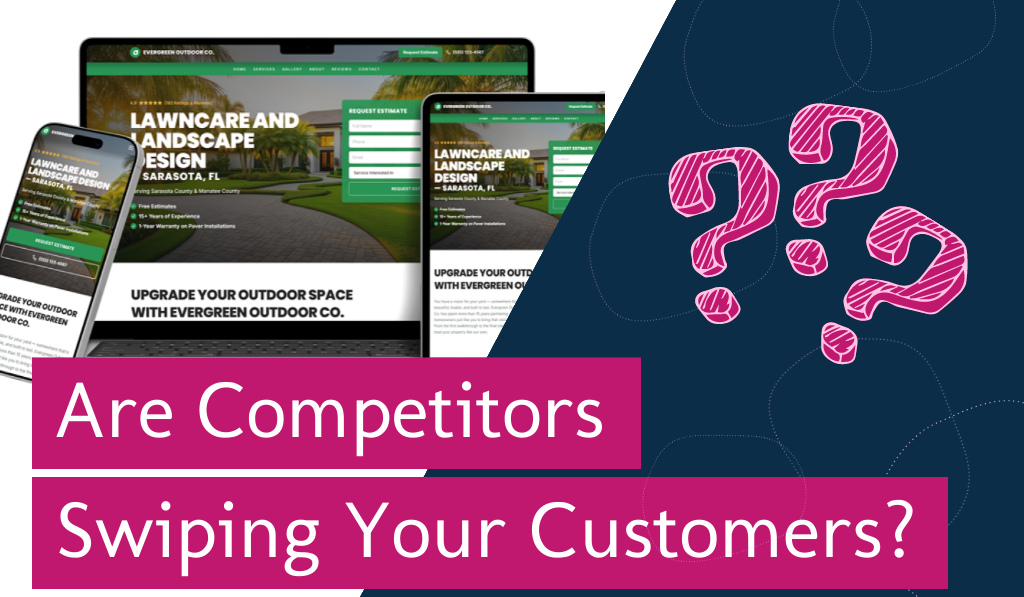
A single-page conversion website — built with your real business name, your actual hours, your services, your service area, and your existing reviews — can be live in 24 hours. Not a template with placeholder text you have to fill in yourself. A real site, built for your specific business, ready to start working the day after you say go.
The cost is $499 flat. No hourly billing. No ongoing invoices every time someone makes a change. No surprises at the end.
One number. One day. A professional website that starts sending the right signals to Google and the right message to every customer who looks you up.
If you want to see what that looks like before committing to anything, we build a free mockup for every business we reach out to. It's already live — your name, your hours, your reviews on a real site, right now. No obligation to do anything with it. But most people who see it wonder why they waited.
The One Question Worth Asking Yourself
Pull out your phone right now. Open Google and search your business name.
What comes up?
If you have a website that loads cleanly, shows your services, and looks the way your business deserves to look — great. You're already doing the thing.
If what comes up is a Facebook page, a bare-bones listing with no site attached, or nothing at all — you just saw exactly what your potential customers see when they're deciding whether to call you or move on.
That moment, right there, is the whole argument.
You don't need a perfect website. You don't need something elaborate or expensive or built over the course of six weeks. You need something real and professional that shows up when someone looks for you and makes them feel confident enough to call.
That part is easier and faster than most people expect. If you want to see what this can look like for your business, click here to get your free mockup. No strings attached. If you don't like it, you don't buy it.
The customers are already searching. Are they finding you?